
Understanding pp recycling: a practical guide for businesses
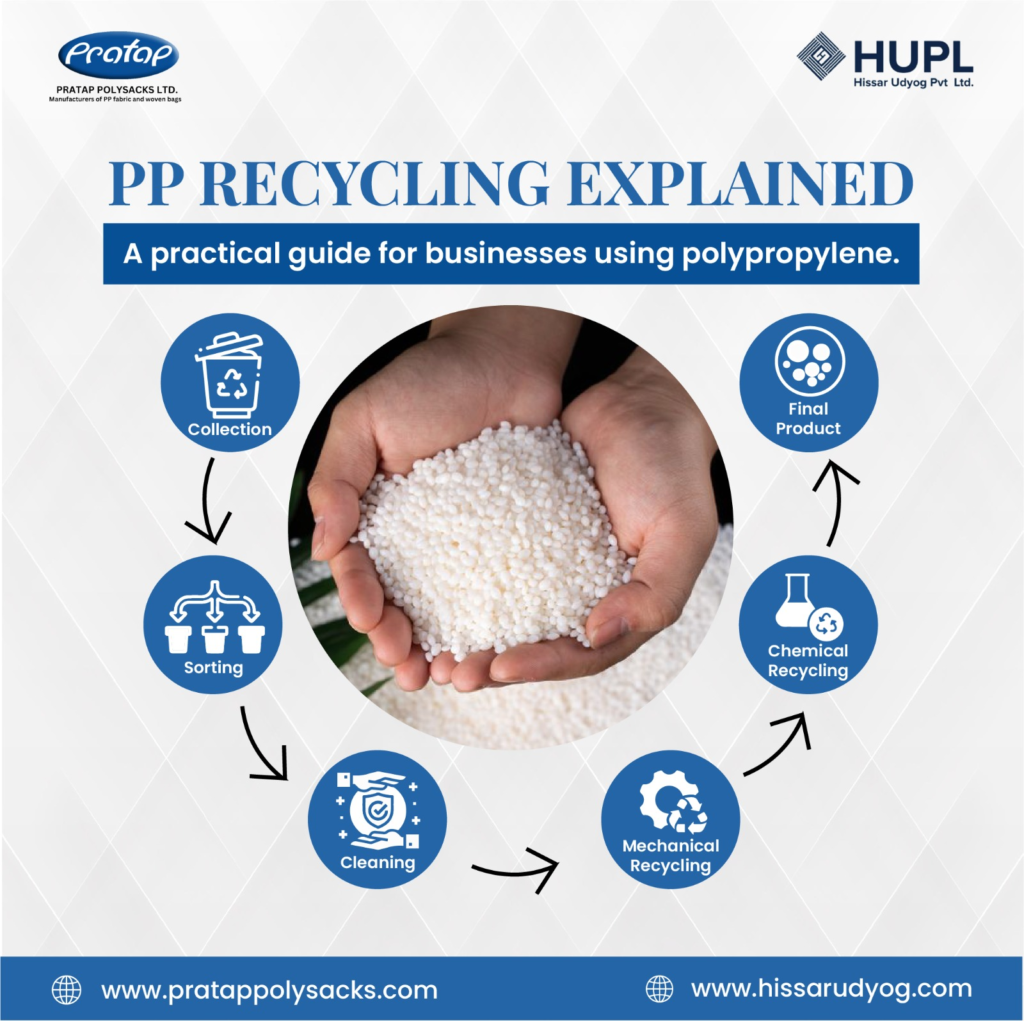
If your business uses polypropylene (PP) in packaging or products, understanding how PP recycling works can help you make smarter, more responsible material decisions.
Recycling PP is not just about waste reduction. It’s about lowering dependence on virgin resin, recovering material value, and building a more efficient and sustainable supply chain.
What recycling polypropylene (pp) involves
Recycling polypropylene involves collecting used PP products and processing them into reusable material or new products. When done correctly, this process reduces landfill waste and keeps valuable plastic resources in circulation-without compromising performance.
For businesses, this means better material efficiency and long-term sustainability benefits.
How polypropylene is recycled: step by step
Polypropylene recycling generally follows two main routes-mechanical recycling and chemical recycling. Each method has a role, depending on the condition and type of PP waste being handled.
1. Start with proper collection and sorting
The first step is ensuring that polypropylene waste is collected and separated correctly. This may happen through municipal collection systems, industrial waste handling, or material recovery facilities.
At this stage, accurate sorting is essential. PP must be identified and separated from other plastics using methods such as manual sorting, density separation, and sensor-based technology. Mixing PP with other polymers can significantly reduce the quality and usability of the recycled material, so this step sets the foundation for effective recycling.
2. Focus on thorough cleaning and preparation
Once sorted, polypropylene items need to be cleaned properly. This includes removing food residue, dust, adhesives, labels, and any non-PP components such as metal clips or mixed-material closures.
Clean input material leads to more consistent and higher-quality recycled PP. Skipping or rushing this step often results in inferior recycled output, which limits where the material can be reused.
3. Use mechanical recycling for suitable pp products
Mechanical recycling is the most widely used and established method for recycling polypropylene. If the PP material is clean and relatively uniform, this is usually the most efficient option.
The process typically involves:
- Shredding or grinding the cleaned PP into flakes
- Further washing and drying to remove remaining contaminants
- Melting the flakes and converting them into recycled PP pellets
These pellets can then be used in manufacturing processes such as injection moulding, extrusion, or non-woven fabric production. Mechanical recycling works best for rigid PP products like crates, containers, automotive parts, and industrial packaging.
4. Consider chemical recycling for complex waste
When PP waste is heavily contaminated or consists of mixed materials that are difficult to recycle mechanically, chemical recycling becomes a viable alternative. This method breaks polypropylene down into smaller chemical components using processes such as pyrolysis or depolymerisation. The resulting output can be used as feedstock for producing new polymers, helping close the material loop even for challenging waste streams.
While chemical recycling is still expanding at scale, it plays an important supporting role alongside mechanical recycling.
5. Understand where energy recovery fits in
If material recycling is not feasible, controlled energy recovery can be used to convert polypropylene into heat or electricity. Although this is lower on the recycling hierarchy than material recovery, it can be part of a broader, integrated waste management approach when other options are limited.
Why this matters for your business
By understanding how polypropylene recycling works, you can:
- Make more informed packaging and material choices
- Reduce environmental impact
- Improve material efficiency
- Align with sustainability and compliance expectations
Knowing the process helps you plan better-whether you are sourcing materials, designing packaging, or evaluating recycling outcomes.
At Pratap Polysacks Limited, we work closely with polypropylene materials every day, helping businesses choose packaging solutions that balance performance, reliability, and responsible material use.
If you’re exploring how PP recycling fits into your packaging strategy, we’re here to guide you. Connect with us to discuss smarter, more sustainable PP solutions for your business.
For inquiries: enquiry@pratappolysacks.com, enquiry@hissarudyog.com
+91 8335043525, 033-66141200 /01