
Key Factors You Should Consider When Selecting The Right Animal Feed Bags
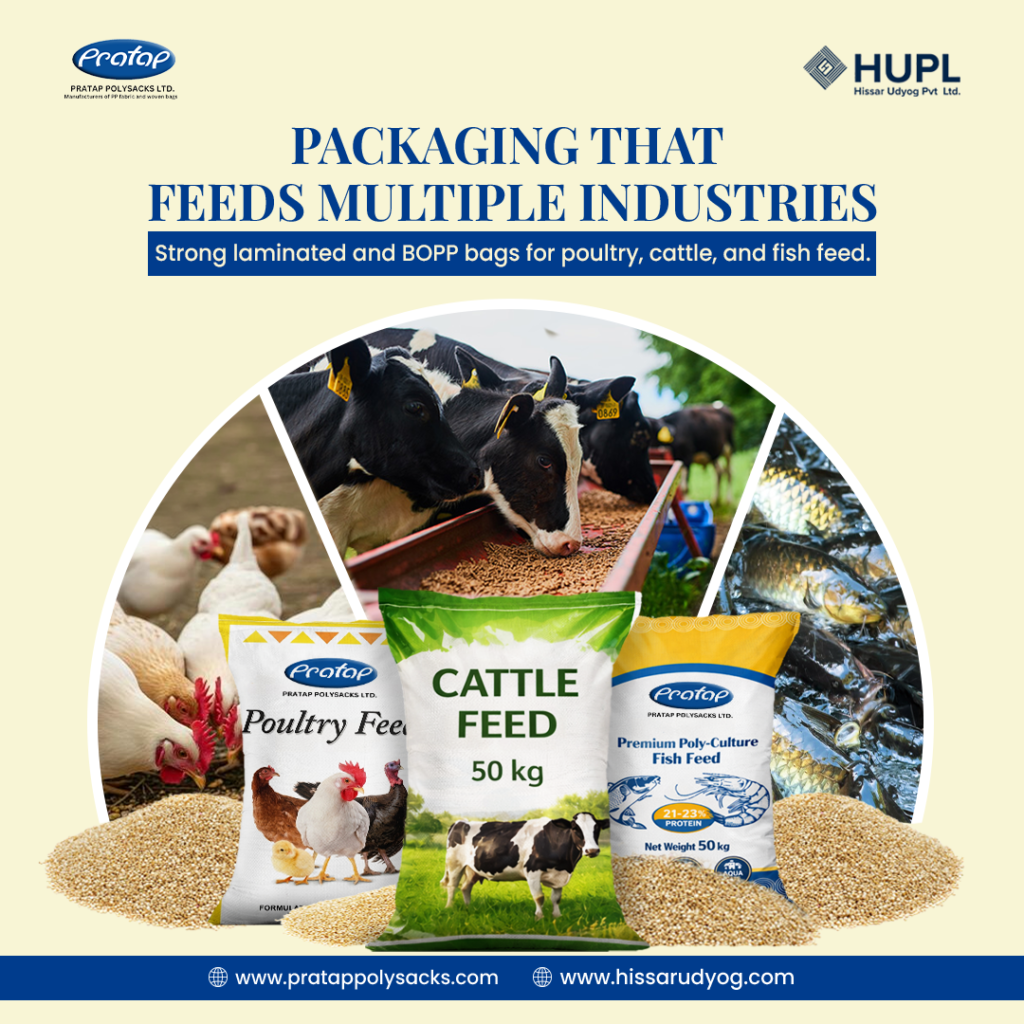
Choosing the correct feed packaging directly impacts product quality, shelf life, and day-to- day efficiency. To help you make informed decisions, here are the essential elements you should evaluate before finalizing your feed bags.
Select the Right Material for Your Feed
i) Polypropylene (PP): If you’re looking for a dependable and cost-effective option, PP woven fabric offers the perfect balance of strength and breathability. It keeps the feed protected from tearing and moisture while maintaining freshness, making it ideal for long-term storage.
ii) BOPP (Biaxially Oriented Polypropylene): For brands that want both durability and superior presentation, BOPP is an excellent upgrade. It provides strong UV resistance, enhanced moisture protection, and high-quality printing for better branding. This is a great choice if your feed requires added visual appeal along with heavy-duty performance.
Pick the Ideal Size & Capacity
i) Based on Feed Type and Quantity: Always align the bag size with your storage volume and feed category. Bulk feed operations may require larger woven bags or FIBCs, while smaller farms may prefer compact packaging. Choosing the correct size prevents waste, reduces empty air space, and supports overall product efficiency.
ii) For Easy Handling & Transport: Your bag size also affects operational convenience. Bigger bags help reduce transport frequency, but may require mechanical handling. Smaller bags are easier to move manually but increase storage requirements. The right balance can significantly improve your logistics and cost structure.
Choose the Best Closure System
i) Heat Sealed: If your priority is maximum freshness and contamination control, heat sealing is the ideal option. It creates an airtight closure that protects the feed from moisture, pests, and spoilage—especially useful for premium or sensitive feed types.
ii) Stitching: Stitched bags remain a reliable and economical choice for standard feed products. While not fully airtight, they offer strong and secure closure for products that don’t require complete moisture isolation.
Ensure Long-Lasting Freshness & Nutrient Protection
i) UV Protection: When your bags are UV-treated, you prevent nutrient loss, especially vitamins that degrade in sunlight. This helps you maintain quality even in outdoor or semi-exposed storage conditions.
ii) Controlling Moisture & Airflow: Moisture control is critical. Moisture-resistant bags keep feed safe from mold, while breathable fabrics help avoid condensation, ensuring your feed stays dry and fresh throughout its storage cycle.
iii) Safeguarding Against Light & Temperature Changes: Exposure to light and fluctuating temperatures can reduce feed quality. Bags designed with light-blocking and thermal stability help protect nutritional value, reduce wastage, and maintain feed consistency.
Ready to Elevate Your Feed Packaging?
At Pratap Polysacks Ltd., we design feed bags that prioritize your product’s safety, freshness, and brand impact. Whether you need PP woven, BOPP laminated, or customized packaging solutions, we ensure durability, reliability, and performance at every step.
Reach out to us today, and we will guide you to choose the perfect feed bag tailored to your operational needs.
For inquiries:
enquiry@pratappolysacks.com, enquiry@hissarudyog.com
+91 8335043525, 033-66141200 /01